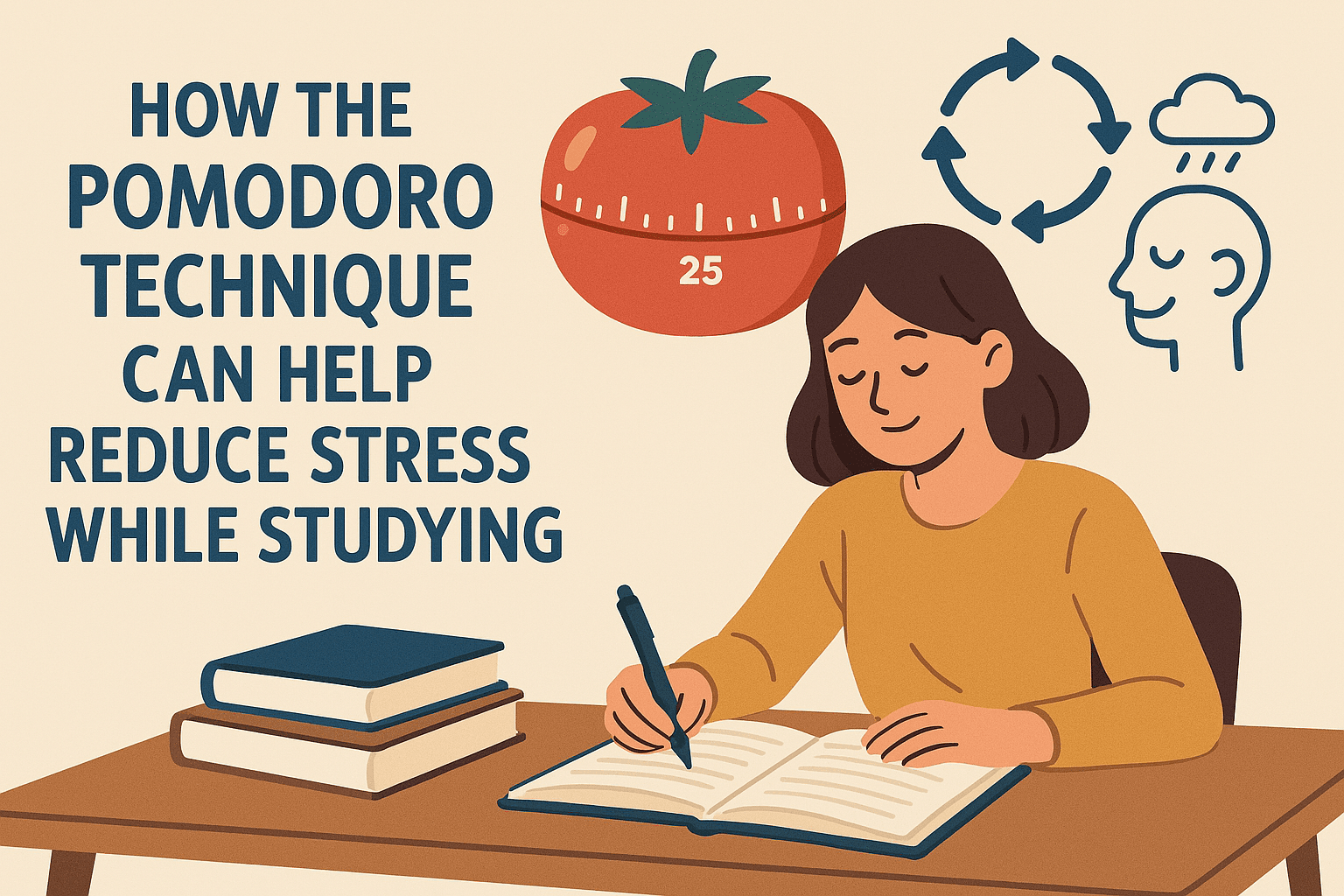
As a student, you’re no stranger to stress. Between juggling multiple assignments, studying for exams, and trying to maintain a social life, it’s easy to feel overwhelmed. However, there is a simple yet effective technique that can help you manage your time, increase productivity, and reduce stress: the Pomodoro Technique.
What is the Pomodoro Technique?
The Pomodoro Technique was developed by Francesco Cirillo in the 1980s. The technique is named after a kitchen timer in the shape of a tomato (Pomodoro in Italian) that Cirillo used to help him stay focused. The technique is simple:
- Choose a task you want to work on.
- Set a timer for 25 minutes (or another length of time that works for you).
- Work on the task without any interruptions or breaks until the timer goes off.
- Take a 5-minute break.
- Repeat steps 2-4 for a total of 4-6 “Pomodoros” per session.
- After four “Pomodoros,” take a longer break of 15-30 minutes.
How Can the Pomodoro Technique Help Reduce Stress While Studying?
The Pomodoro Technique can help reduce stress while studying in several ways:
- Breaks down large tasks into smaller ones: Studying for an exam or working on a large project can feel overwhelming. The Pomodoro Technique helps you break down these large tasks into smaller, manageable chunks, making them feel less daunting.
- Helps you stay focused: By dedicating a set amount of time to a task, you can eliminate distractions and stay focused on what you need to accomplish. This helps you make the most of your study time and reduces the feeling of being overwhelmed.
- Provides regular breaks: Taking regular breaks can help you recharge and reduce stress. The Pomodoro Technique ensures that you take breaks regularly, which can help you come back to your study session feeling refreshed and focused.
- Helps you avoid burnout: Studying for long periods without taking breaks can lead to burnout. The Pomodoro Technique helps you avoid burnout by providing regular breaks and helping you maintain a sustainable study pace.
- Increases productivity: By staying focused and avoiding distractions, you can complete tasks more efficiently. This can help you feel a sense of accomplishment and reduce stress.
Tips for Using the Pomodoro Technique While Studying
- Start with a manageable Pomodoro length: If you’re new to the Pomodoro Technique, start with a shorter Pomodoro length (e.g., 10-15 minutes) and gradually increase the length as you become more comfortable with the technique.
- Use a timer: A timer can help you stay on track and avoid the temptation to check your phone or social media.
- Eliminate distractions: Turn off your phone, log out of social media, and find a quiet study space to help you stay focused.
- Take breaks seriously: Use your breaks to do something enjoyable or relaxing, such as taking a walk, stretching, or meditating.
- Be flexible: Don’t be too hard on yourself if you need to adjust the Pomodoro Technique to fit your needs. Experiment with different Pomodoro lengths and break times to find what works best for you.
Conclusion
The Pomodoro Technique is a simple yet effective way to reduce stress while studying. By breaking down large tasks into smaller ones, staying focused, and taking regular breaks, you can increase your productivity and reduce your stress levels. Remember to be flexible and adjust the technique to fit your needs. With the Pomodoro Technique, you can achieve your academic goals while maintaining your mental and physical well-being.
Try it out and see the difference for yourself!